Learning Alphabets: Dive into Words & Sounds!
November 17, 2023
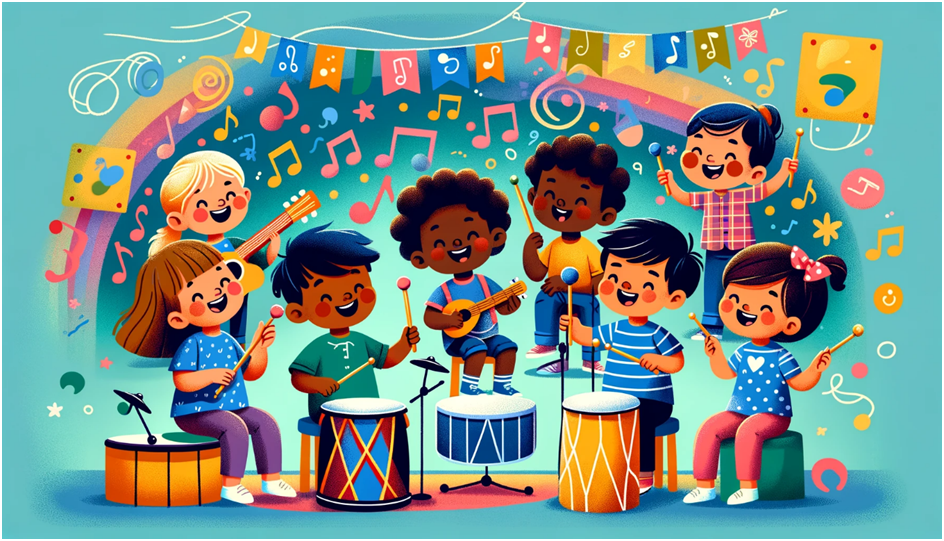
“Tiny Tunes: Exploring the Joy and Benefits of Music in Early Childhood Development”
November 20, 2023
Hello, wonderful parents and guardians! Today, we’re going to embark on an exciting journey into the realm of early language development. It’s a world filled with giggles, babbles, and the magical unfolding of communication skills in our little ones.
The First Steps in Language Learning
From the moment they are born, babies are tuned in to the language around them. They start by listening and absorbing the rhythm and tones of speech. By around six months, those adorable babbles begin, a delightful mix of sounds that pave the way for real words. It’s not just about talking; it’s about connecting and understanding, forming the foundation of communication.
The Role of Environment
Your home is the first classroom for your child’s language development. Engaging in daily conversations, reading stories, and singing songs are invaluable practices. These activities not only introduce new words but also help children understand the nuances of language, such as tone and emotion. Remember, your voice and the way you interact with your child are the most important tools in their language learning journey.
Reading and Storytelling
Books are magical portals to language development. Picture books, fairy tales, and even labels around the house become tools for learning new words. As you read together, point to pictures and relate them to the words. This helps in associating words with objects and actions, a fundamental aspect of language development.
Encouraging Expression
Encourage your child to express their thoughts and feelings. Whether it’s through words, gestures, or art, every form of expression is a step towards language development. Listen attentively and respond, showing that their communication is valued. This positive reinforcement boosts their confidence to speak and communicate more.
The Power of Play
Playtime is also learning time! Through play, children experiment with language in a fun, pressure-free environment. Role-playing games, for instance, can enhance vocabulary and storytelling skills. Let their imagination lead, and you’ll be amazed at the linguistic leaps they make!
Remember, Every Child is Unique
Every child’s journey with language is unique. Some might be chatterboxes by age two, while others might take their time. The key is patience and continuous encouragement. If you have concerns about your child’s language development, consulting with a pediatrician or a speech therapist can provide guidance and reassurance.
Conclusion
Watching your child develop language skills is one of the most rewarding experiences. By talking, reading, and playing with them, you’re not just building their vocabulary; you’re opening doors to a world of expression, understanding, and connection. Embrace these moments, and enjoy the wonderful world of words with your little one!
Disclaimer: This blog is for informational purposes only and should not be considered as professional advice. Always consult with a healthcare or educational professional for personalized guidance.